
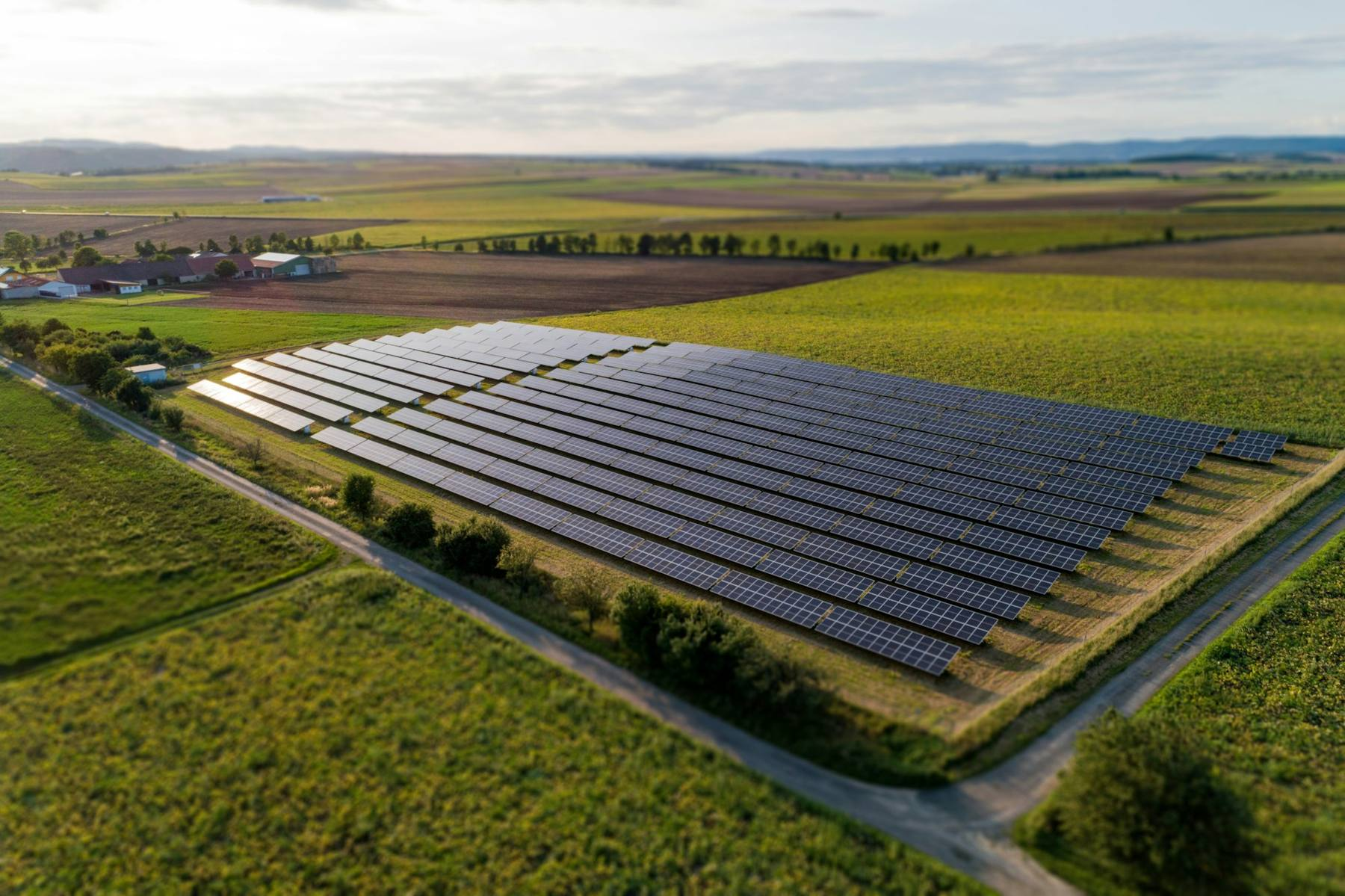



A distinction that matters in an investment committee paper can be obscured in a sustainability brochure. Solar infrastructure vs ESG funds is not simply a choice between two green allocations. It is a choice between direct or structured exposure to operating assets and exposure to a screened, themed or actively managed portfolio of securities. Both can support transition-focused capital deployment, but they produce materially different risk, return and governance profiles.
For professional investors, family offices and intermediaries, the relevant question is not which route carries the stronger ESG label. It is which structure offers an appropriate combination of income, asset security, liquidity, valuation discipline and reporting for the mandate at hand.
Solar Infrastructure vs ESG Funds: The Core Difference
Solar infrastructure exposure is linked to physical generating assets: photovoltaic installations, associated grid connections, land rights, power purchase arrangements, operating contracts and, in some cases, development-stage pipeline capacity. Returns are generally driven by electricity generation, contracted or merchant power prices, availability, operating costs, financing terms and the residual value of the assets.
An ESG fund, by contrast, is an investment vehicle whose holdings are selected, weighted or engaged according to an ESG methodology. It may hold listed equities, bonds, sovereign debt, green bonds, infrastructure companies or a mixture of securities. Its environmental credentials depend on the fund mandate, exclusions, stewardship approach and underlying holdings. It does not necessarily own renewable-energy assets directly.
That difference affects the investor’s economic exposure. A solar portfolio can provide a clearer connection to measured output, installed capacity and project-level revenue. An ESG fund may provide broader diversification and daily dealing, but performance can remain heavily influenced by public-market valuations, sector allocation, interest rates and the manager’s investment process.
Neither structure is automatically superior. The right allocation depends on the investor’s liquidity requirements, tolerance for development and operational risk, target duration, income objectives and ability to conduct due diligence on underlying assets.
Asset Ownership Changes the Return Profile
Infrastructure is defined by operational reality. A solar asset must be built or acquired, connected, insured, maintained and monitored. Its investment case should be tested against irradiance assumptions, degradation rates, inverter replacement schedules, curtailment risk, grid availability, lease terms and the credit quality of energy counterparties.
When these components are properly structured, solar infrastructure can offer a return profile supported by physical assets and recurring revenue. Cash flow may be contracted through power purchase agreements or supported by regulated mechanisms, although the degree of protection varies by jurisdiction and contract. Merchant-price exposure can increase upside in favourable markets but also introduces volatility that should not be mistaken for contracted yield.
ESG funds may include companies that develop, operate or supply renewable-energy projects, but investors are purchasing securities rather than a defined interest in a specified solar portfolio. A listed renewable developer, for example, may be affected by debt markets, acquisition activity, management execution, equity-market sentiment and operations across several countries. Those factors can be entirely valid sources of return, but they are different from project-level infrastructure exposure.
For allocators seeking duration and visible asset backing, this distinction is central. Net asset value in a real-asset structure should be supported by asset valuations, operating data and financing arrangements. Fund unit values are generally marked by the market value of their holdings, which can move sharply even where long-term sustainability themes remain intact.
Liquidity Is Valuable, but It Has a Price
ESG funds usually offer superior liquidity. Many are available through daily traded public markets or periodic subscriptions and redemptions. This can suit portfolios requiring tactical flexibility, transparent pricing and straightforward rebalancing.
Solar infrastructure is commonly less liquid. Direct projects, private vehicles and asset-backed structures may require longer holding periods and more formal transfer processes. Valuations may be periodic rather than continuous, and an exit can depend on buyer demand, financing conditions and the quality of project documentation.
That illiquidity is not inherently a defect. Long-duration infrastructure can match long-term liabilities and may offer an illiquidity premium where cash flows are credible and governance is strong. However, it must be acknowledged at the outset. An investor should not allocate capital intended for near-term liquidity needs into a structure whose value is realised through asset operation and eventual sale.
The key is alignment. A liquid ESG allocation may be appropriate for a satellite position, public-market mandate or short-notice portfolio adjustment. A solar infrastructure allocation may be more appropriate where capital can be committed for a defined period in exchange for direct exposure to generating capacity and project-level cash flow.
ESG Labels Require Different Due Diligence
An ESG fund should be assessed beyond its name. Investors should review the benchmark or investment universe, exclusions, revenue thresholds, stewardship policy, concentration limits, turnover, fees and treatment of controversial holdings. A broad ESG fund may retain exposure to sectors that a particular investor considers incompatible with its policy. Conversely, an actively managed strategy may use engagement rather than exclusion as its principal tool.
Solar infrastructure requires a different diligence framework. The emphasis moves to technical, legal, commercial and financial evidence. Relevant materials include land rights, planning status, grid documentation, engineering reports, construction and operations contracts, insurance cover, revenue arrangements, financial models and a compliance register covering counterparties and transaction processes.
The environmental case should also be evidenced. Installed capacity alone is not enough. Investors should understand expected annual generation, carbon-displacement methodology, equipment supply-chain standards, end-of-life plans and the practical management of biodiversity and community impacts. Measurable output is more meaningful than generic sustainability language.
The role of governance
Governance is the bridge between sustainability intent and investable performance. In a fund, governance includes manager oversight, voting records, mandate compliance and valuation controls. In infrastructure, it includes special-purpose vehicle governance, reporting rights, debt covenants, reserve accounts, operating oversight, delegated authority and counterparty verification.
This is particularly relevant where assets are acquired, developed or financed across borders. Clear documentation, formal know-your-counterparty procedures and disciplined transaction management reduce avoidable execution risk. They also give investors greater confidence that environmental objectives are being pursued within a commercially accountable structure.
Income Visibility and Inflation Sensitivity
Solar infrastructure is often considered by investors seeking income visibility. That case is strongest where revenues are contracted, counterparties are creditworthy and operating assumptions have been independently tested. Some contracts include indexation features, while others are fixed or partially exposed to wholesale electricity prices. The detail matters because inflation protection should be demonstrated in contractual terms, not assumed from the word infrastructure.
ESG funds can generate income through dividends and bond coupons, but their distribution profile is determined by the underlying portfolio and manager policy. A fund focused on growth-stage technology companies may have little income. A green-bond strategy may offer more predictable coupons, while still carrying duration and credit risk.
For an investor with a defined yield requirement, the appropriate comparison is therefore not solar versus ESG in the abstract. It is forecast distributable cash flow from a specific infrastructure opportunity against the fund’s stated income policy, historic distribution record, fees and underlying risk exposures.
Where Each Allocation Can Fit
ESG funds can serve as efficient portfolio building blocks. They may provide broad geographic exposure, access to listed companies that benefit from energy-transition capital expenditure and a liquid mechanism for implementing a sustainability policy. They can be useful where diversification across issuers and sectors is the primary objective.
Solar infrastructure can serve a different role: a longer-term allocation to identifiable real assets with defined capacity, operating metrics and potential recurring revenues. It may complement public-market ESG exposure by reducing reliance on listed-equity valuations and creating a more direct link to energy generation.
A blended approach is often more defensible than an either-or decision. An investor may retain liquid ESG funds for tactical flexibility while allocating a portion of long-term capital to asset-backed renewable infrastructure. The allocation should reflect portfolio construction rather than marketing categories.
Questions That Should Be Answered Before Commitment
Before allocating to either route, investment committees should establish whether the expected return is driven principally by asset cash flow, public-market appreciation, credit spread, regulatory support or manager selection. They should also identify the liquidity terms, fee layers, currency exposure, leverage limits, valuation methodology and reporting frequency.
For solar assets, particular attention should be paid to project stage. Operating assets and early-stage development opportunities should not be assessed on the same basis. A development pipeline may represent significant strategic value, but it carries planning, grid, procurement, construction and financing risk before it becomes revenue-generating capacity.
For ESG funds, committees should ask whether the ESG methodology aligns with their own policy and whether the portfolio’s sustainability claims can be traced to holdings, engagement activity and measurable indicators. A high rating from one provider is not a substitute for mandate-level scrutiny.
RA-LP’s operating model reflects the real-asset side of this distinction: sustainability-led exposure structured around renewable energy, smart infrastructure, compliance discipline and measurable project performance. For investors considering such opportunities, the quality of the asset base and transaction framework should remain the starting point.
The most useful allocation is the one whose risks can be named, measured and monitored. Where capital is intended to support the energy transition over the long term, that discipline matters more than the label attached to the vehicle.